
The Ultimate Guide to Premium Hardwood Logs: Why Quality Wood Matters for Your Home
When the temperature drops and the nights draw in, there is nothing quite like the crackle and glow of a real wood fire. It is the heart of the home during the winter months, providing a primal sense of comfort and unmatched warmth. However, as any seasoned stove owner will tell you, not all firewood is created equal. As a wood supplier expert with years of experience in the industry, I often see homeowners struggle with smoky fires, blackened stove glass, and frustratingly poor heat output, all of which can be traced back to one culprit: low-quality, high-moisture fuel.
If you are looking for a clean, efficient, and high-heat experience that protects your appliance and your chimney, the Standard Bulk Bag of Premium Hardwood Logs is the industry benchmark. In this comprehensive guide, we will dive deep into the science of hardwood, the critical importance of the “Ready to Burn” standard, and how to strategically choose between Birch, Oak, Ash, or a Mixed load to suit your specific heating lifestyle.
1. The Science of the “Ready to Burn” Standard
The most critical factor in firewood quality isn’t actually the species of the tree, it’s the moisture content. Our premium hardwood logs are guaranteed to have a moisture content below 20%, meeting the rigorous standards required for modern eco-design stoves and local air quality regulations.
The Problem with “Wet” Wood
When you burn “green,” “fresh-cut,” or poorly seasoned wood, you aren’t just burning wood; you are attempting to boil water. The fire must spend a massive amount of energy evaporating the water trapped inside the cellular structure of the timber before it can begin to produce actual radiant heat. This creates a cascade of negative effects:
- Creosote and Tar Buildup: Excess moisture leads to incomplete combustion. This produces thick, black, acidic soot and creosote that coats the inside of your chimney or flue. Over time, this restricts airflow and dramatically increases the risk of dangerous chimney fires.
- Low Thermal Efficiency: In scientific terms, you get significantly less “kilowatt-hour” (kWh) value per log. While a dry log might provide 5kWh of heat, a wet log might provide less than 2kWh, as the rest is wasted as steam escaping up the chimney.
- Environmental Degradation: High-moisture wood is the primary source of particulate matter (PM2.5) emissions from domestic heating. Burning dry wood is a responsible choice for both your home and your local community’s air quality.
By choosing kiln-dried or expertly seasoned logs with less than 20% moisture, you ensure a clean burn, clear stove glass that stays soot-free, and maximum heat efficiency for every penny spent.
2. Comparing the “Big Three”: Birch vs. Oak vs. Ash
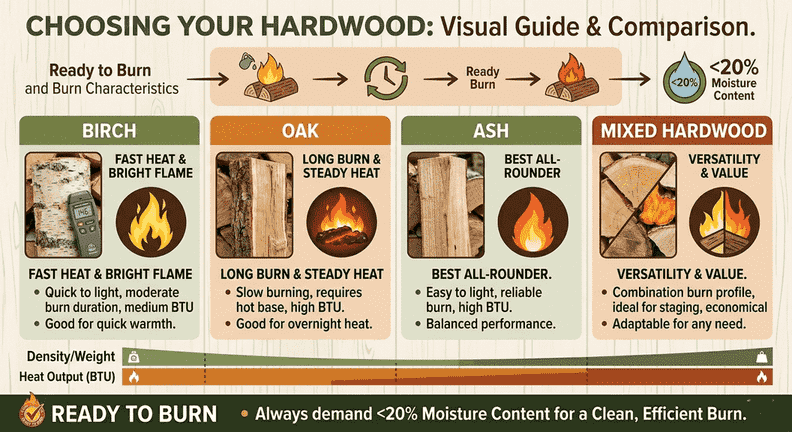
Every tree species has a unique density and cell structure, which translates to a specific “burn profile.” Understanding these differences allows you to “engineer” your fire based on whether you want a quick burst of heat or a slow, overnight glow.
Birch: The Radiant Quick-Starter
Birch is a favorite for those who value aesthetics and immediate warmth. It features a beautiful silvery bark and is categorized as a slightly “softer” hardwood.
- Burn Quality: Birch ignites very easily due to the natural oils in its bark. it produces a bright, lively flame that dances in the stove, creating a wonderful atmosphere. It reaches peak temperature much faster than Oak.
- Best For: Occasional burners who only light their stove for a few hours in the evening, owners of smaller modern stoves, or as “kindling-plus” to get a larger fire established.
- Expert Tip: Because it burns a bit faster, it is often the most cost-effective entry point for premium hardwood. Use it to warm up your cold chimney quickly before adding denser logs.
Oak: The Marathon Runner of Firewood
Oak is the “gold standard” for those who rely on wood as a primary heat source. It is incredibly dense and heavy, meaning it packs a massive amount of potential energy into a small space.
- Burn Quality: It burns slowly, steadily, and for a very long time. It doesn’t produce the high, flickering flames of Birch; instead, it creates a deep, glowing bed of intense embers that radiate heat for hours.
- Best For: Overnight heating, large open hearths, and those who want a “set it and forget it” fire. It is ideal for the coldest months of January and February.
- Expert Tip: Oak requires a lot of oxygen and a very hot fire to get started. Never try to light a fire using only Oak; always start with Birch or Ash and only add Oak once you have a glowing red base of charcoal.
Ash: The Versatile All-Rounder
If you could only choose one wood for the rest of your life, most experts would choose Ash. It has been prized for centuries for its low natural moisture content and superb burning qualities.
- Burn Quality: It strikes a perfect balance. It provides a decent flame for atmosphere while maintaining a dense enough structure to last significantly longer than Birch. It produces very little smoke and consistent heat.
- Best For: Literally any stove, fireplace, or fire pit. It is the most “forgiving” wood to burn and is perfect for beginners and enthusiasts alike.
3. The Mixed Load: The Best of All Worlds
For many of our customers, the Mixed Hardwood Load is the most practical and popular choice. These loads typically contain a curated blend of the species mentioned above, often including other high-quality hardwoods like Beech or Sycamore.
The Strategic Advantage of a Mixed Load:
- Staged Burning: You can use the Birch pieces to get the fire started and the flue up to temperature in 15 minutes. Once the stove is hot, you can transition to the Ash and Oak pieces to sustain that heat for the rest of the evening.
- Cost Efficiency: Mixed loads are often priced more competitively than single-species bags, offering the premium performance of hardwood without the “boutique” price tag of 100% Oak.
- Adaptability: Whether it’s a mild autumn evening requiring a light fire or a freezing winter night requiring a heavy burn, a mixed bag gives you the tools for both scenarios.
4. Understanding the Bulk Bag Advantage
When you order a Standard Bulk Bag, you are investing in a consistent supply chain. Our bags are filled by volume and settled to ensure you receive a fair and honest amount of fuel.
Precision Sizing for Modern Stoves
We ensure our logs are cut to a standard length (typically 25cm or 10 inches). This is a crucial detail because modern Eco-Design stoves have smaller fireboxes designed for maximum efficiency. A log that is even an inch too long can be a nightmare to fit, leading to forced door closures and broken firebricks. Our precision cutting ensures every log is “stove-ready.”
Logistics and Storage
The bulk bag is designed to keep your property tidy. It prevents a “mountain of wood” from sprawling across your driveway.
- Airflow: The breathable material of the bag allows for minor residual moisture to escape.
- Storage Best Practices: We recommend moving your logs into a dedicated, roofed log store as soon as possible. Ensure the store has open sides to allow the wind to whistle through the logs, this keeps them in peak “Ready to Burn” condition. Never wrap your logs in plastic tarpaulins that touch the wood, as this causes “sweating” and mold growth.
5. Advanced SEO Tips for Smart Firewood Buyers
When you are browsing online for firewood, being “search-savvy” can save you from buying low-quality imitations. Use these specific terms to find the best suppliers:
- “Kiln Dried Hardwood Near Me”: This helps find local suppliers who have invested in professional drying equipment.
- “BS EN ISO 17225-5”: This is the technical standard for graded firewood. Suppliers who mention this are serious about quality.
- “Volume vs. Weight”: Always buy by volume (cubic meters or bag size). Buying by weight is risky because “wet” wood weighs more, meaning you pay more for water and less for fuel.
- “Sustainability”: Look for FSC (Forest Stewardship Council) or PEFC certified wood to ensure your logs come from responsibly managed forests where trees are replanted.
6. Frequently Asked Questions (FAQ)
How long will a standard bulk bag last?
For a typical household burning a fire 3–4 evenings a week during the winter, a standard bulk bag usually lasts between 4 and 6 weeks. If you use your stove as a primary heat source 24/7, you should budget for one bag every 10–14 days.
Can I mix hardwood with coal?
If you have a multi-fuel stove, yes. However, we recommend avoiding “house coal” and using smokeless fuel if you must mix. That said, many of our customers find that once they switch to premium kiln-dried Oak or Ash, the heat output is so high they no longer need the expense or mess of coal.
My glass is turning black is it the wood?
Almost certainly. Black glass is a sign of “incomplete combustion,” usually caused by wood that is too wet or by “slumbering” the fire (restricting oxygen too much). Switch to our <20% moisture logs and run your stove “hot” for 20 minutes to see the glass clear up naturally.
7. The Hidden Benefits: Chimney Longevity and Maintenance
While most people focus on the heat, using premium hardwood has a massive impact on your home’s infrastructure.
- Reduced Sweep Frequency: Because dry hardwood produces minimal creosote, your annual chimney sweep will be a much cleaner and faster process.
- Appliance Health: High-moisture wood creates acidic gases that can corrode the internal baffles and grates of expensive stoves. Dry wood extends the life of your stove by years.
Conclusion: Invest in Better Heat
Choosing a Standard Bulk Bag of Premium Hardwood is more than just a purchase, it’s an investment in your home’s comfort, your family’s safety, and the longevity of your fireplace. By understanding the different characteristics of Birch, Oak, and Ash, you can take full control of your home heating.
Stop struggling with smoke and lackluster heat. Start your season right with wood that is guaranteed to perform.
Ready to stock up for the season? Select your preferred wood type today, whether it’s the lively Birch, the enduring Oak, or our popular Mixed Hardwood load, and experience the difference that true premium quality makes.